
Cash App review
 Analysis by GetAllApps
I think of Cash App as a money tool that happens to cover several different jobs: paying people, handling banking tasks, buying bitcoin, and investing. That breadth is useful when I want fewer financial apps on my phone, but it also means I would not treat it as a simple payment shortcut without first deciding which parts I actually plan to use. My practical advice is to start with the task you need today, then explore the other options only when you understand how they fit your finances.
Trust starts with choosing what to use
Cash App is a free finance app from Block, Inc., and its long-running presence makes it a familiar name rather than an unknown payment service. It has been available since October 15, 2013, and its current version is 5.74.0. It has a 4.7 average from around 4.5 million ratings, with more than 100 million installs. Those figures suggest broad adoption, but popularity is not a substitute for checking what you are doing before moving money or sharing personal information.
The app is rated for Everyone, though that age label should not be confused with a recommendation for every financial product or situation. Money transfers, investing, and bitcoin involve different kinds of decisions. I would approach each one separately, especially if I were helping a younger family member or setting up an account for someone else. The right question is not simply whether the app is widely used; it is whether its tools and account setup suit the person using them.
In everyday use, I find the main appeal is having several money activities gathered in one place. A friend can send me money, and I can use the same app to look at other financial options. That convenience has a trade-off: one account can become important to more parts of your financial life. I would keep that in mind before making it the only place where I manage payments, investments, or bitcoin.
Decide on the job before exploring the menu
For casual person-to-person payments, Cash App is easiest to understand when I treat it as a way to settle a specific shared expense. If I split lunch with a friend, I can use it to send or receive the amount rather than exchanging cash. For a person who regularly pays a group of friends, that can be more convenient than asking everyone to use a bank transfer. But if the people I pay already use a different service, introducing another account may create more friction than it removes.
The broader mix of services is more valuable for someone who wants to explore payments, banking, investing, and bitcoin from one app. It is less compelling for a person who only needs occasional transfers and prefers to keep financial activities separate. A dedicated bank app may be the more natural home for routine account management, while a specialist investment platform may suit someone who wants a focused investing experience. Cash App’s convenience is real, but it does not make every category of financial tool interchangeable.
Keep account control in the routine
My most useful habit with any payment app is to pause before confirming a transfer: check the recipient, the amount, and the reason for sending. That small review is especially worthwhile when I am paying someone with a similar name or handling several requests at once. A quick payment flow can save time, but speed makes it easy to act on the wrong detail if I am distracted.
I would also make a point of looking through the account and privacy choices available in the app rather than assuming that the initial setup is the only setting that matters. Account controls are most useful when I know where to find them before there is a problem. I prefer to review them during setup, when I can make a deliberate choice, instead of trying to learn the interface under pressure after a suspicious message or an unexpected account change.
One practical trade-off is that reducing how much financial activity I centralize can also reduce convenience. If I use Cash App only for occasional payments, I may have fewer reasons to explore its other sections, but I also have fewer activities to keep track of there. If I use its broader money features, I should be comfortable reviewing each activity on its own terms rather than assuming that a payment account, an investment, and bitcoin carry the same considerations.
Be deliberate around sensitive information
Financial apps involve moments when I need to pay close attention: creating an account, making a transfer, and deciding whether to use features involving investments or bitcoin. I would treat requests for personal or financial details as a reason to slow down and read what is on screen. If an action feels unclear, I would not continue simply because the next button is easy to tap. Convenience should not replace understanding what I am authorizing.
I also avoid treating a familiar app name as proof that every message about it is genuine. If someone contacts me unexpectedly and asks me to send money or provide sensitive information, I would use caution and check the situation through the app’s own channels rather than relying on the message. This is sound practice for any payment service, and it matters particularly when an app is used for quick transfers between people who may not know one another well.
Before using a financial app, I like to consider what I am comfortable keeping in a single account and what I would rather handle elsewhere. That is a personal boundary, not a judgment that one arrangement is right for everybody. Someone who values separation may prefer to keep everyday payments in one place and investing in another. Someone who values a compact setup may be happy to bring more activities together, provided they remain attentive to each decision.
Everyday use rewards a little preparation
Picture a shared dinner where one person pays the bill and several friends settle their portions later. Cash App can make that exchange straightforward if the group already uses it. I would agree on the amount first, confirm the recipient carefully, and keep track of who has paid rather than sending money twice after a busy evening. That simple routine makes a payment app more useful without turning a casual transfer into an avoidable mix-up.
A less obvious use case is deciding not to use every feature just because it is available. I might use the app for payments while leaving investing and bitcoin alone until I have a clear reason to use them. That is a sensible way to get value from a multipurpose finance app without treating its full menu as a checklist. The reverse can also be true: someone who wants a dedicated place for investing may find that an app spanning multiple money activities is not focused enough for their needs.
When someone asks whether they can simply install it and start sending money, I would say that the app is built around convenient money activity, but they should first make sure they are comfortable with the account setup and the choices presented to them. For ongoing use, I would keep a habit of checking payment details and reviewing the account controls. Those are more useful safeguards than assuming that a quick interface removes the need for attention.
Where it fits among financial alternatives
Compared with a conventional bank app, Cash App is oriented toward bringing person-to-person payments together with additional financial options. A bank app may be preferable if the main goal is to manage an existing banking relationship in a familiar, institution-centered setting. Compared with a single-purpose payment app, Cash App offers a wider set of activities, but that breadth can make it feel less minimal to someone who only wants to split expenses.
For people considering investing or bitcoin, I would compare the experience and terms carefully with services built specifically around those activities. A broad app can be convenient for getting started, but convenience alone does not tell me whether a particular product matches my goals or comfort with risk. I would make that decision separately from the question of whether I like using the app to pay friends.
The app is a poor fit if I want every financial activity kept in a separate service, if the people I need to pay do not use it, or if I am uncomfortable managing transfers through a phone app. It may also be the wrong choice for someone who expects a payment tool to replace careful attention to account settings and transaction details. In those cases, a bank’s own app or a more specialized service may feel clearer.
My cautious verdict
Cash App is most convincing when I use it for a clear, limited purpose and stay deliberate about account choices. I like the convenience of handling payments alongside other financial options, and I can see why it suits people who prefer a compact toolkit. Its scale and strong average rating make it a widely adopted choice, but they do not tell me whether its broader features are right for my individual needs.
I would recommend trying it to someone who often sends or receives money from people already using the service and who is comfortable reviewing the details before confirming a transaction. I would be more cautious if I wanted a highly specialized investment experience, preferred strict separation between financial activities, or simply needed occasional payments and did not want another account to manage. The best approach is to begin with the task that brought you to Cash App, learn the controls, and add other uses only when they make sense for you.
Pros and cons
Pros
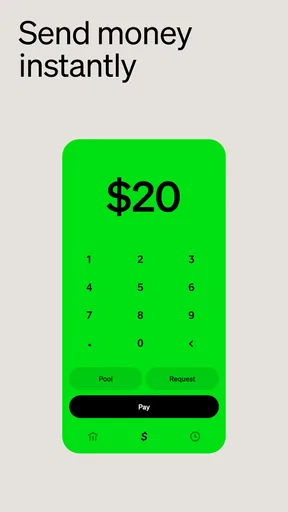
- Send money to friends quickly using their $Cashtag.
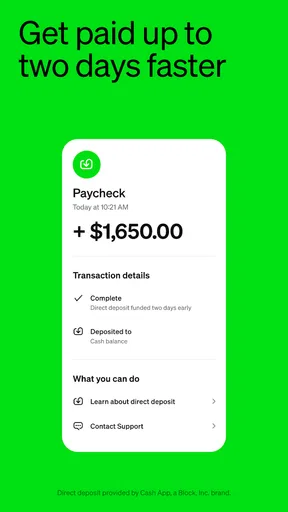
- Set up recurring direct deposits with eligible employers.
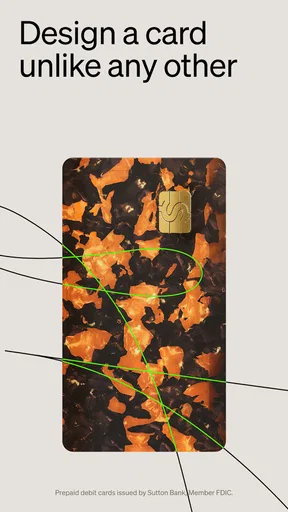
- Use a customizable debit card for purchases and ATM withdrawals.
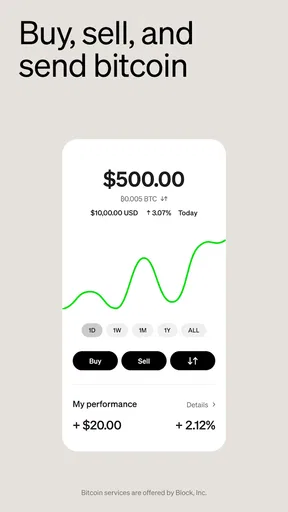
- Buy and sell Bitcoin directly within the app.
- Track spending and manage account activity from one dashboard.
Cons
- Some transfers may take several business days unless you pay a fee.
- Cash App is not a bank and account services have limits.
- Bitcoin features may be unavailable in some regions.
- Customer support options can be limited for urgent issues.
- Payments sent to the wrong person may be difficult to recover.


